

TL;DR:
- Natural rubber teethers are made from latex from the rubber tree and are non-toxic and biodegradable.
- They offer a safer, more sustainable alternative to plastic or silicone teethers, with gentle textures for gums.
- Choosing natural rubber supports environmental health and aligns with conscious living and eco-friendly values.
Not all baby teethers are created equal, and many parents are surprised to discover just how much the material inside that little chew toy matters. Walk into any baby shop and you’ll find teethers made from plastic, silicone, wood, and natural rubber, often sitting side by side with no clear guidance on which is safest. The differences between these materials are significant, both for your baby’s health and for the planet. In this guide, we’ll explain exactly what a natural rubber teether is, how it compares to other options, and what you should look for when choosing one for your little one.
Table of Contents
- What is a natural rubber teether?
- How do natural rubber teethers compare to other teething materials?
- The health and safety benefits of natural rubber teethers
- Choosing and caring for a natural rubber teether
- Environmental advantages of natural rubber teethers
- Why natural rubber teethers are more than a baby trend
- Find your perfect natural rubber teether with Hevea Australia
- Frequently asked questions
Key Takeaways
| Point | Details |
|---|---|
| Natural and safe material | Natural rubber teethers avoid toxic chemicals found in many synthetic products. |
| Easy to clean | With simple care, natural rubber teethers remain hygienic and last longer. |
| Eco-friendly choice | These teethers are biodegradable and support a more sustainable lifestyle. |
| Stringent safety standards | High-quality natural rubber teethers undergo rigorous testing for infant safety. |
What is a natural rubber teether?
A natural rubber teether is a teething toy made from the sap of the Hevea brasiliensis tree, also known as the rubber tree. Farmers collect this sap, called latex, by making small cuts in the tree bark and allowing the milky liquid to flow out. This process is called tapping, and it does not harm the tree. The sap is then processed and moulded into soft, flexible teething shapes that babies can safely chew on.
What makes natural rubber teethers stand out is their composition. Unlike synthetic alternatives, they contain no petroleum-based chemicals, no BPA, and no phthalates. Natural rubber teethers are made from the sap of the Hevea brasiliensis tree, offering a non-toxic and biodegradable option for babies. This matters enormously when you consider that babies spend a great deal of time mouthing their teethers, meaning any chemicals in the material can be directly ingested.
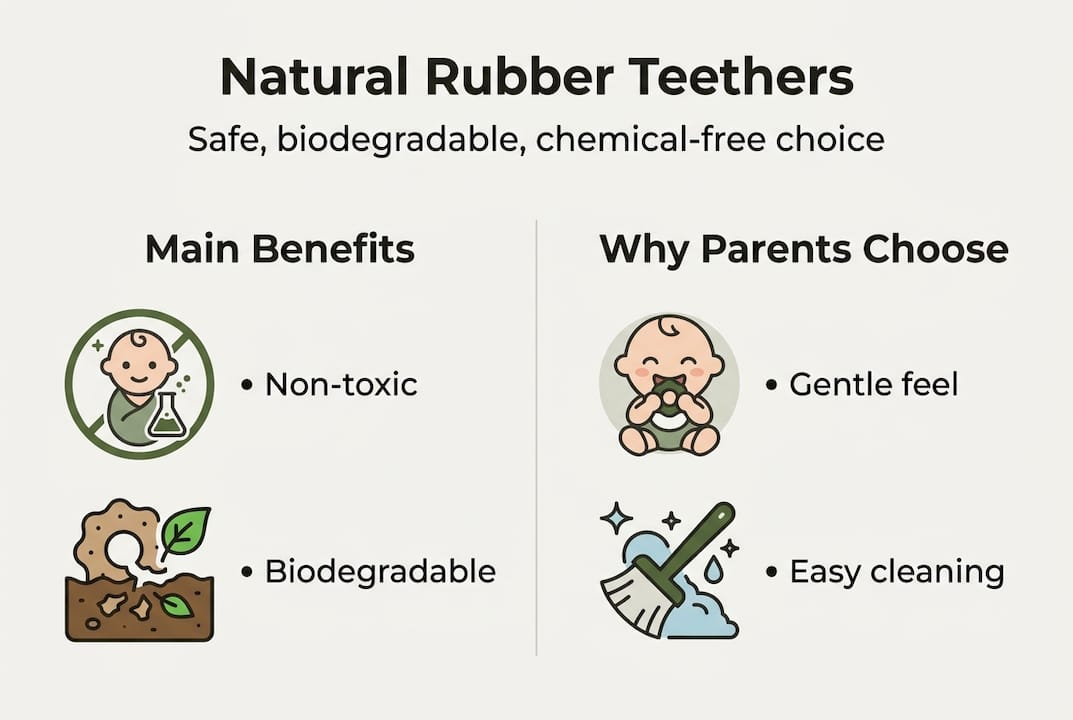
Here is a quick overview of what makes up a quality natural rubber teether:
| Feature | Natural rubber teether |
|---|---|
| Source | Hevea brasiliensis tree sap |
| Chemical additives | None (BPA-free, phthalate-free) |
| Texture | Soft, flexible, and gentle on gums |
| Biodegradability | Yes, fully biodegradable |
| Certifications | Meets international infant safety standards |
The texture of natural rubber is another key advantage. It is soft enough to soothe sore gums without causing damage, yet firm enough to provide the counter-pressure babies crave during teething. This balance is difficult to replicate with synthetic materials.
Key attributes that set natural rubber teethers apart include:
- Sustainably sourced: Rubber trees are a renewable resource that can be tapped for decades without being felled.
- Biodegradable: At the end of their life, natural rubber products break down naturally rather than sitting in landfill for centuries.
- Non-toxic: No harmful chemical additives are used in production.
- Sensory-friendly: The natural give of rubber closely mimics the feel of skin, which is comforting for babies.
- Durable: With proper care, natural rubber teethers last through the full teething period.
For eco-conscious parents, the entire lifecycle of a product matters. Natural rubber teethers score well at every stage, from ethical sourcing to safe use and responsible disposal.
How do natural rubber teethers compare to other teething materials?
Now that we’ve explained what a natural rubber teether is, let’s see how it actually stacks up against other popular choices.
| Material | Safety | Eco-friendliness | Durability | Sensory feel |
|---|---|---|---|---|
| Natural rubber | Excellent | Excellent | Very good | Soft, flexible |
| Silicone | Good | Moderate | Excellent | Firm, smooth |
| Plastic | Poor | Poor | Good | Hard, rigid |
| Wood | Good | Good | Moderate | Hard, textured |
Plastic teethers are perhaps the most concerning option. Natural rubber avoids harmful chemicals commonly found in plastic teethers, such as BPA and phthalates. These chemicals are endocrine disruptors, meaning they can interfere with a baby’s hormonal development. Even products labelled “BPA-free” may contain substitute chemicals with similar risks.

Silicone is a popular alternative and is generally considered safe. It is odourless, easy to clean, and does not harbour bacteria as readily as some other materials. However, silicone is a synthetic material derived from silica and chemical processing. It is not biodegradable, and its production has a higher environmental footprint than natural rubber. Exploring the differences in natural rubber vs silicone shows that while silicone is a reasonable choice, it cannot match natural rubber’s sustainability credentials.
Wood teethers have gained popularity among eco-conscious parents, and they do offer a natural, chemical-free option. The main drawback is texture. Wood is rigid and unyielding, which may not provide the same soothing pressure as a softer material. Wooden teethers also require careful drying after cleaning to prevent mould growth in cracks.
Here is a numbered breakdown of the key considerations when comparing teething materials:
- Chemical safety: Prioritise materials that are free from BPA, phthalates, PVC, and artificial dyes.
- Texture and comfort: Softer materials like natural rubber tend to be more soothing for inflamed gums.
- Environmental impact: Consider the full lifecycle, from sourcing to disposal.
- Ease of cleaning: Materials that can be thoroughly cleaned without degrading are safest for repeated use.
- Certifications: Look for products that meet Australian and international infant safety standards.
When you browse teething options for your baby, keeping these five criteria in mind will help you cut through the marketing noise and focus on what genuinely matters.
Pro Tip: Avoid teethers with small detachable parts, painted surfaces, or strong chemical smells. These are warning signs regardless of the material used.
The health and safety benefits of natural rubber teethers
When it comes to the well-being of our little ones, health and safety top the list. Here’s why natural rubber teethers stand out.
Natural rubber is inherently non-toxic and, for most babies, hypoallergenic. It does not require chemical plasticisers to achieve its soft, flexible texture, unlike PVC-based plastics. This means there is nothing leaching into your baby’s mouth during those long chewing sessions. Natural rubber teethers undergo thorough quality controls to ensure they meet the highest safety standards for infants, giving parents genuine peace of mind.
The key health and safety benefits of natural rubber teethers include:
- No harmful chemicals: Free from BPA, phthalates, PVC, and artificial colours.
- Gentle on developing gums: The soft, yielding texture supports healthy oral development without causing gum trauma.
- One-piece construction: Quality natural rubber teethers are moulded as a single piece, eliminating the risk of small parts breaking off and becoming a choking hazard.
- Naturally antimicrobial: Natural rubber has some inherent resistance to bacterial growth compared to porous materials.
- Meets strict certification standards: Look for products tested to EN71 (European toy safety) and AS/NZS standards relevant to Australian consumers.
“Choosing a teether is one of the first product decisions you make as a parent. Opting for chemical-free products sets a standard for the kind of environment you want to create for your child.”
One concern some parents raise is latex allergy. Natural rubber does contain latex proteins, and a small number of children have a sensitivity to these proteins. If your family has a history of latex allergy, consult your paediatrician before introducing a natural rubber teether. For the vast majority of babies, however, natural rubber is perfectly safe and well tolerated.
For newborns and very young infants, choosing products designed specifically for their developmental stage is important. Products made for safety for infants are sized and shaped to suit tiny mouths and developing motor skills, reducing any risk associated with a teether that is too large or too small.
Pro Tip: Inspect your baby’s teether regularly for signs of wear, such as tears, sticky patches, or discolouration. Replace it promptly if you notice any of these changes.
Choosing and caring for a natural rubber teether
After learning about the safety benefits, it’s important to know how to choose and look after these natural products for the best results.
Selecting the right teether starts with knowing what to look for. Here is a step-by-step guide:
- Check the material certification: Ensure the product is made from 100% natural rubber and carries relevant safety certifications. Avoid products that list synthetic additives or coatings.
- Look for one-piece construction: A single-moulded teether has no joints or seams where bacteria can accumulate or where parts can detach.
- Choose an age-appropriate size and shape: A teether designed for a newborn differs from one suited to a six-month-old. Match the product to your baby’s developmental stage.
- Assess the texture variety: Some teethers offer different surface textures on different areas, which can target different parts of the gum and provide varied sensory stimulation.
- Consider the shape for grip: Babies have limited motor control, so a teether with easy-to-grasp handles or a shape that is simple to hold independently is a practical choice.
Regular cleaning and inspection of teethers help maintain hygiene and extend the teether’s life. For daily cleaning, wash the teether with warm, soapy water and rinse thoroughly. Allow it to air dry completely before returning it to your baby. Avoid boiling natural rubber teethers or placing them in the dishwasher, as high heat can degrade the rubber and shorten the product’s lifespan.
Storage matters too. Keep teethers away from direct sunlight and extreme temperatures, as these conditions can cause the rubber to deteriorate faster. A clean, breathable pouch or container is ideal.
For eco-friendly baby tips on extending the life of natural baby products, small habits like rinsing after each use and storing properly can make a meaningful difference.
Pro Tip: Chill a clean natural rubber teether in the refrigerator (not the freezer) for added soothing relief on particularly sore teething days. The cool temperature helps reduce gum inflammation naturally.
Environmental advantages of natural rubber teethers
Lastly, it’s not just about baby’s health. Parents increasingly care about the footprint of the products they buy, and natural rubber teethers offer compelling environmental credentials.
Natural rubber is biodegradable and sustainably sourced, making it a strong environmental choice over petroleum-based plastics. While a plastic teether may sit in landfill for hundreds of years after your child has finished with it, a natural rubber teether will break down within a much shorter timeframe, returning to the earth without leaving a toxic legacy.
The environmental advantages of choosing natural rubber include:
- Renewable resource: Rubber trees can be tapped for 25 to 30 years, producing latex continuously without being cut down.
- Carbon sequestration: Rubber tree plantations absorb carbon dioxide from the atmosphere, contributing positively to climate balance.
- Lower production footprint: Manufacturing natural rubber requires significantly less energy and fewer chemical processes than producing synthetic rubber or plastics.
- Biodegradable end-of-life: Natural rubber decomposes naturally, unlike silicone or plastic which persist in the environment for centuries.
- Supporting ethical supply chains: Many natural rubber producers operate under fair trade or ethical sourcing frameworks, benefiting farming communities in countries like Thailand and Sri Lanka.
- Plastic-free packaging: Brands committed to sustainability often pair natural rubber products with plastic-free packaging, reducing waste at every stage.
Every choice we make ripples into the future. When you select a natural rubber teether over a plastic one, you are not just protecting your baby today. You are contributing to a healthier planet for the generation you are raising.
The impact of sustainable baby products extends well beyond individual families. As more parents make these choices, manufacturers respond by shifting production practices, and the cumulative effect on the market is significant.
Why natural rubber teethers are more than a baby trend
It would be easy to dismiss natural rubber teethers as another wellness trend, the kind that fills Instagram feeds for a season and then fades. We think that misses the point entirely.
Parents who choose natural rubber teethers are not simply following a trend. They are making a statement about the kind of world they want their children to grow up in. The choice reflects a philosophy of conscious living, where the safety of a product, its origins, and its end-of-life impact are all part of the decision.
What we find genuinely encouraging is the market shift this represents. When parents collectively demand safer, more sustainable products, manufacturers are forced to respond. That is real power. The long-term benefits of sustainability are not just environmental. They are cultural. They signal a growing expectation that products designed for the most vulnerable members of our community should meet the highest possible standards, not the lowest acceptable ones.
Choosing natural rubber is not about perfection. It is about intention. And that intention, repeated across millions of households, changes industries.
Find your perfect natural rubber teether with Hevea Australia
If you are ready to make a safer, more sustainable choice for your baby, we are here to help you find the right fit.
At Hevea Australia, every teether in our range is made from 100% natural rubber, free from plastics, BPA, and harmful chemicals. Our products are rigorously tested to meet international safety standards, so you can feel confident in every chew. Whether you are just starting to explore your options or you already know what you are looking for, our shop teething collection makes it easy to browse by age, shape, and function. You can also learn about quality directly on our site, or take a closer look at a customer favourite, the see Panda Teether, a beautifully designed, one-piece natural rubber teether loved by families across Australia.
Frequently asked questions
Are natural rubber teethers safe for all babies?
Natural rubber teethers are designed to meet rigorous safety standards and are safe for most babies, but parents should check for any family history of latex sensitivity before use. When in doubt, speak with your paediatrician for personalised guidance.
How do I clean a natural rubber teether?
Wash the teether with warm, soapy water and allow it to air dry fully before giving it back to your baby. Proper cleaning preserves the rubber and keeps the teether hygienic, so avoid boiling or dishwasher cleaning as heat degrades the material.
Can natural rubber teethers biodegrade after use?
Yes, natural rubber teethers are fully biodegradable and will break down far more quickly than plastic or silicone alternatives. As a biodegradable material, natural rubber is a much kinder option for the environment after disposal.
Do natural rubber teethers have a smell?
Some natural rubber teethers carry a mild, sweet scent that comes from the rubber tree sap itself. This is entirely natural and harmless, and the scent typically fades with regular use and cleaning.
