

Bath time should be one of the most soothing rituals of early parenthood, but for eco-conscious parents, it can quietly become a source of anxiety. The shelves are full of products labelled “gentle,” “natural,” or “pure,” yet many contain ingredients that raise real concerns for developing skin and the environment. Sorting genuine safety from clever marketing is genuinely hard work. This guide walks you through exactly what non-toxic means, what to check before you buy, how to choose the right products for every category, and how to confirm your choices hold up after purchase. Every step is grounded in verified safety standards and sustainability values.
Table of Contents
- Understanding non-toxicity in bath essentials
- Checklist before you buy: Ingredients and certifications
- Step-by-step: Selecting the safest bath products
- Mistakes to avoid and expert troubleshooting
- Verifying safety and sustainability after purchase
- What most parents overlook about non-toxic bath choices
- Safe, eco-conscious bath essentials for your baby’s care
- Frequently asked questions
Key Takeaways
| Point | Details |
|---|---|
| Third-party verification is crucial | Look for EWG Verified and similar certifications to ensure true non-toxicity. |
| Ingredient transparency matters | Avoid undisclosed fragrances and harsh chemicals for baby skin safety. |
| Sustainability aligns with health | Choosing plant-based, recycled packaging lowers environmental and health risks. |
| Routine impacts safety | How often and what you use in baths matters as much as product choice. |
Understanding non-toxicity in bath essentials
The word “non-toxic” gets used freely on packaging, but it has no single regulated definition in Australia. What it should mean is this: low hazard, verified ingredient transparency, and the confirmed absence of chemicals known to harm human health or the environment. For babies and toddlers, this matters more than most parents realise.
Babies absorb substances through their skin at a significantly higher rate than adults do. Their detoxification systems are still developing, which means even low-level chemical exposure can have a greater impact. A product that poses minimal risk for an adult may be a different story for a six-month-old.
Here is what genuinely non-toxic looks like in practice:
- Verified ingredient transparency: Every ingredient is disclosed and traceable, with no vague terms like “fragrance” masking undisclosed chemicals.
- Third-party certification: Independent organisations assess the product, not just the brand itself. EWG Verified standards are among the most rigorous, requiring products to meet strict criteria for ingredient safety and transparency, with ratings of 1 to 2 indicating low hazard.
- No greenwashing: Claims like “plant-based” or “eco-friendly” without certification are marketing, not safety guarantees.
- Minimal ingredients: Fewer ingredients generally means fewer opportunities for exposure to problematic compounds.
Greenwashing is widespread in the baby care category. A product can legally call itself “natural” while containing synthetic preservatives or undisclosed fragrance compounds. Our product quality standards outline what genuine verification looks like, and it goes well beyond a label claim. When you are making sustainable baby choices, the same scrutiny that applies to dummies and toys applies equally to soaps and shampoos.
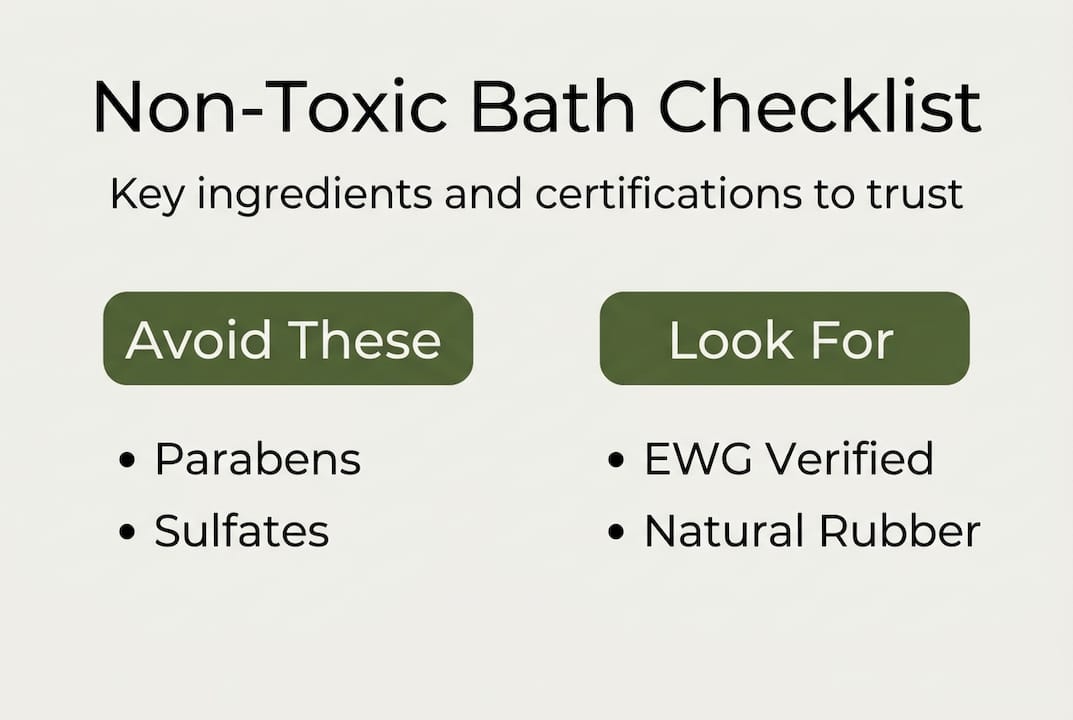
Checklist before you buy: Ingredients and certifications
Knowing what non-toxic means is the foundation. The next step is building a practical checklist you can use every time you evaluate a new product.
Ingredients to avoid:
- Parabens (methylparaben, propylparaben): Preservatives linked to endocrine disruption.
- Phthalates: Often hidden inside “fragrance,” associated with hormonal effects.
- Synthetic fragrances: A single fragrance ingredient can contain dozens of undisclosed chemicals.
- Sodium laureth sulfate (SLES): A foaming agent that can irritate sensitive skin and may be contaminated with 1,4-dioxane.
- Formaldehyde-releasing preservatives: Such as DMDM hydantoin or quaternium-15.
- Oxybenzone: Found in some sunscreens, flagged for hormonal activity.
A trusted shampoo benchmarks analysis of 22 baby shampoos by Consumer Reports and Made Safe identified brands including Attitude, Babo Botanicals, and Badger as top performers, screening for both human and environmental health risks with no known hazards identified.
| Verification type | What it means | Trust level |
|---|---|---|
| EWG Verified | Strict ingredient and transparency standards met | High |
| Made Safe certified | Screened for human and environmental safety | High |
| “Natural” label only | No independent verification, marketing claim | Low |
| No certification shown | Unknown safety profile | Uncertain |
Always check product safety guidelines before purchasing accessories too. A natural rubber toys option, for instance, avoids the plasticisers and PVC concerns common in conventional plastic bath toys.
Pro Tip: Download a free ingredient scanning app such as Think Dirty or EWG’s Healthy Living app. Scan the barcode before you buy and check the hazard rating in seconds.
Step-by-step: Selecting the safest bath products
With your checklist ready, here is a clear process for selecting safe products across every category.
- Start with soap. Choose a mild, neutral-pH soap without additives, used sparingly. The American Academy of Pediatrics (AAP) recommends fragrance-free, hypoallergenic options and advises using moisturiser after bathing to protect the skin barrier.
- Choose your shampoo carefully. Look for EWG or Made Safe certification. Brands like Attitude and Babo Botanicals consistently appear in safety benchmarks. Avoid anything listing “fragrance” without full disclosure.
- Select a moisturiser. Fragrance-free and hypoallergenic are non-negotiable for newborns. Oat-based or calendula formulations are well-tolerated by sensitive skin.
- Evaluate your accessories. A natural bath mat made from natural rubber avoids the PVC and chemical plasticisers found in many conventional bath mats. Look for accessories with third-party safety verification.
- Check dummies and teethers used at bath time. A safe baby dummy made from 100% natural rubber is free from BPA, PVC, and synthetic additives.
| Category | Recommended brands | Key criteria |
|---|---|---|
| Soap | Badger, Babo Botanicals | Neutral pH, fragrance-free |
| Shampoo | Attitude, Babo Botanicals | EWG/Made Safe certified |
| Moisturiser | Badger, Weleda | Fragrance-free, oat or calendula |
| Bath mat | Hevea Planet | Natural rubber, no PVC |
| Bath toys | Hevea Planet | 100% natural rubber, mould-free |
Pro Tip: For newborns and premature babies, follow newborn bath guidance and delay the first full bath. Avoid essential oils entirely in the first few months, as even natural oils can irritate very new skin.
Mistakes to avoid and expert troubleshooting
Even the most careful parents make avoidable mistakes. Here are the most common ones and how to sidestep them.
Common mistakes:
- Trusting “natural” without verification. This is the most frequent error. A product can be plant-derived and still contain irritants or allergens. Always look for third-party certification.
- Ignoring scent disclosures. “Unscented” is not the same as “fragrance-free.” Unscented products can still contain masking fragrances. For newborns, fragrance-free is the only safe choice.
- Overlooking packaging. Plastic packaging can leach chemicals into products over time, particularly in warm, humid bathroom conditions. Prioritise products in glass, aluminium, or certified recycled packaging.
- Assuming one reaction means all natural products are unsafe. A reaction to one ingredient does not mean the whole category is off-limits. Identify the specific ingredient and avoid it.
“Choose fragrance-free or minimally scented products with fully disclosed essential oils. For newborns, unscented is the safest option to avoid skin irritation.” This guidance, supported by safe fragrance standards, is especially important in the first six months.
For babies with eczema or very sensitive skin, look for products containing colloidal oatmeal or calendula extract. These ingredients have strong safety and efficacy records for reactive skin. If redness, hives, or dry patches appear after introducing a new product, stop use immediately, rinse the area with plain water, and consult your paediatrician before trying anything new.
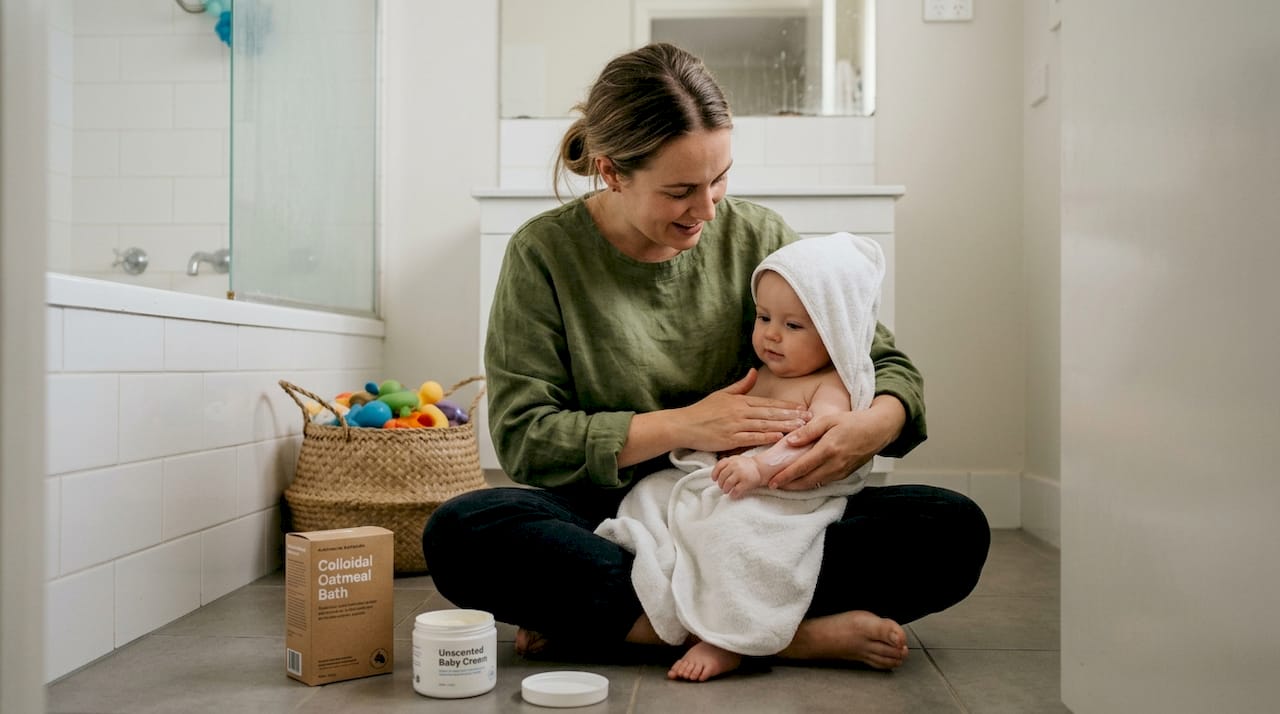
When choosing safe pacifiers and other accessories, apply the same scrutiny. Every item that touches your baby’s skin or mouth during bath time is worth evaluating carefully.
Verifying safety and sustainability after purchase
Bringing a product home is not the final step. A few simple habits help you confirm your choices continue to meet safety and sustainability standards over time.
Post-purchase verification checklist:
- Check the packaging material. Look for recycled content, plant-based plastics, or compostable materials. Sustainable sourcing standards from EWG Verified products often include transparency around packaging and supply chain sourcing.
- Re-read batch information. Formulations can change between production runs. Check the batch number and compare it against any updated safety alerts from the brand or certification body.
- Store products correctly. Heat and humidity degrade ingredients and can encourage bacterial growth. Keep products in a cool, dry spot rather than directly in the shower.
- Inspect accessories regularly. Natural rubber bath mats and toys should be checked for any signs of deterioration. Follow proper care tips to extend the life of your accessories and maintain hygiene standards.
- Dispose responsibly. When a product is finished, rinse containers thoroughly before recycling. Natural rubber accessories are biodegradable, making them a genuinely lower-impact end-of-life option.
Pro Tip: Set a reminder every three months to review the products you use regularly. Brands update formulations, certifications lapse, and new safety research emerges. Staying current is a small effort with a meaningful impact.
What most parents overlook about non-toxic bath choices
Most of the conversation around safe bath products focuses on what is in the bottle. That matters enormously. But in our experience, the bigger picture is often missed entirely.
Your routine shapes your baby’s exposure as much as any single ingredient. Bath frequency, water temperature, and the accessories you use all play a role. Bathing too often strips the skin’s natural protective barrier, making it more permeable to whatever product you apply next. Very hot water does the same. These are not product problems; they are habit problems.
Accessories are also underestimated as exposure sources. A conventional plastic bath mat sitting in warm, wet conditions can leach plasticisers over time. A mouldy bath toy releases spores into the water your baby plays in. These risks are invisible on any ingredient label.
The most genuinely safe bath routine combines verified, low-hazard products with thoughtful habits: bathing two to three times per week for newborns, keeping water comfortably warm rather than hot, and choosing accessories made from materials you trust as much as you trust the soap. Review not just the label, but the whole routine. That is where real safety lives.
Safe, eco-conscious bath essentials for your baby’s care
For parents who want bath time to be genuinely worry-free, the products you choose and the materials they are made from both matter deeply.
At Hevea Planet, every bath accessory is made from 100% natural rubber, free from plastics, BPA, PVC, and synthetic additives. Our mould-free bath toy is designed with no holes, eliminating the hidden mould risk that plagues conventional squirty toys. Our safe bath mat provides natural grip without chemical plasticisers, and our eco bath toy is biodegradable and ethically sourced. Each product meets the safety and sustainability criteria we have outlined in this guide, so you can feel confident that every choice you make for your baby also reflects care for the planet.
Frequently asked questions
What ingredients should I always avoid in baby bath products?
Steer clear of parabens, phthalates, synthetic fragrances, and sodium laureth sulfate. Always choose fragrance-free options or products with fully disclosed, minimal scent ingredients, especially for newborns.
Are eco-friendly bath accessories like rubber mats and toys safer?
Natural rubber bath mats and toys avoid plasticisers and are far less likely to harbour mould than conventional plastic alternatives. Always look for third-party verification to confirm safety claims are independently supported.
How often should I bathe my newborn to protect sensitive skin?
The AAP advises only a couple of baths per week using mild, neutral-pH soap and frequent sponge baths until the umbilical cord falls off, to protect the developing skin barrier.
What if my baby reacts to a ‘natural’ product?
Stop use immediately and rinse the area with plain water. Opt for hypoallergenic, unscented products and consult your paediatrician, as even natural ingredients like calendula or oat can occasionally trigger sensitivity in very reactive skin.
