

Most parents assume that if a baby product is labelled “rubber,” it’s automatically safe. That assumption is worth questioning. The difference between natural rubber and synthetic rubber is not just a matter of origin; it has real implications for what your baby is exposed to every time they chew, suck, or splash. As concerns about toxic chemical exposure in infants grow, more families are looking closely at what their children’s products are actually made from. This article walks you through the key distinctions, the safety evidence, the environmental case, and the honest edge cases, so you can make a genuinely informed choice.
Table of Contents
- Understanding natural rubber versus synthetic alternatives
- Safety features of natural rubber in baby products
- Environmental and hygiene advantages of natural rubber
- Allergy risk, edge cases, and choosing alternatives
- Our take: how to weigh safety, sustainability, and practicality for your family
- Explore safe and sustainable natural rubber options for your family
- Frequently asked questions
Key Takeaways
| Point | Details |
|---|---|
| Natural vs synthetic | Natural rubber is plant-based and free from petrochemicals, unlike synthetic alternatives with toxic risks. |
| Proven baby safety | Natural rubber baby products are certified non-toxic, BPA-free, soothing, and recommended by experts. |
| Eco and hygiene benefits | Natural rubber is biodegradable, blocks mould, and avoids persistent microplastics in your home and environment. |
| Consider allergies | Latex allergy risk is low for most infants but should be checked, with silicone as a safe alternative if needed. |
| Choose certified products | Look for reputable certifications like CE and GOLS for peace of mind when selecting natural rubber baby essentials. |
Understanding natural rubber versus synthetic alternatives
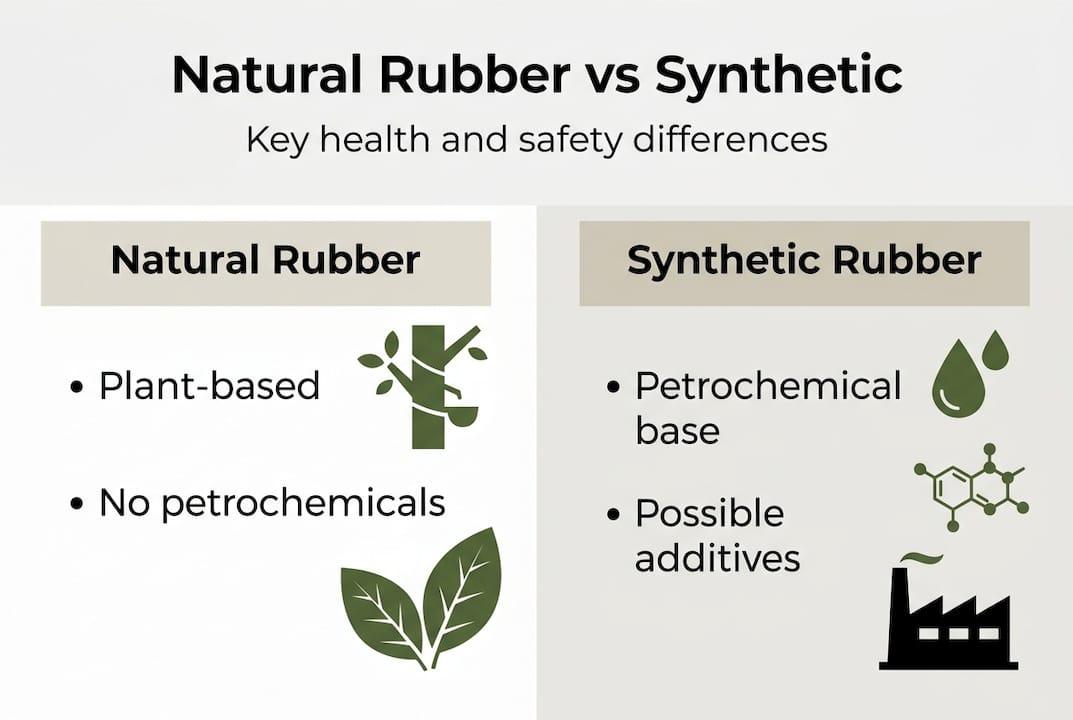
Let’s start with definitions, because the word “rubber” gets used loosely. Natural rubber comes from the milky sap of Hevea brasiliensis trees, tapped sustainably from plantations across Southeast Asia. It is plant-based, renewable, and processed without petrochemicals. Natural rubber is derived from Hevea brasiliensis trees and is free from the petroleum-based additives that define its synthetic counterpart.
Synthetic rubber, by contrast, is manufactured from petrochemical compounds including styrene and butadiene. These are the same building blocks used in plastics and industrial materials. The production process often introduces additives, accelerants, and stabilisers that remain present in the finished product. Synthetic rubbers may leach or off-gas VOCs (volatile organic compounds), which pose health risks particularly in enclosed or warm environments like a baby’s mouth or a steamy bathroom.
For babies and toddlers, this distinction matters enormously. Infants spend hours each day mouthing objects. Their developing systems are far more vulnerable to chemical exposure than adults, and their bodies absorb proportionally more of what they contact.
| Feature | Natural rubber | Synthetic rubber |
|---|---|---|
| Source | Hevea brasiliensis sap | Petrochemicals |
| Renewable | Yes | No |
| VOC risk | Minimal | Moderate to high |
| Hormone disruption risk | Very low | Possible |
| Biodegradable | Yes | No |
| Common in baby products | Dummies, teethers, bath toys | Cheap teethers, toy parts |
The risks from synthetic options are worth naming clearly:
- Potential off-gassing of VOCs during use or when warmed
- Possible presence of polycyclic aromatic hydrocarbons (PAHs), which are linked to developmental harm
- Risk of hormone-disrupting compounds such as phthalates and bisphenols
- Respiratory irritation from prolonged exposure in young children
“Not all rubber is created equal. The source material and manufacturing process determine what your baby is actually putting in their mouth.”
When comparing materials for baby products, it helps to also understand natural rubber vs silicone, since both are popular choices among eco-conscious families. And if you’re considering bath time products specifically, natural rubber bath toys offer a useful starting point for understanding the real-world differences.
Safety features of natural rubber in baby products
Natural rubber’s safety profile is one of the strongest reasons parents choose it. Products made from 100% natural rubber are non-toxic, BPA-free, phthalate-free, and certified under recognised safety standards including CE (European Conformity), UKCA (UK Conformity Assessed), and GOLS (Global Organic Latex Standard).
These certifications are not just marketing language. CE and UKCA marks confirm that a product has been tested against strict safety directives covering chemical composition, mechanical safety, and age-appropriateness. GOLS certification specifically verifies that the latex used meets organic processing standards, limiting exposure to synthetic chemicals throughout the supply chain.
Natural rubber also has physical properties that reduce injury risk. It is soft and flexible, closely mimicking the feel of a mother’s nipple, which makes it soothing for teething gums without the hard edges that firmer plastics can create. For babies who are chewing intensely during teething, this softness is genuinely protective.
Key safety benefits over plastics and synthetic alternatives include:
- Free from BPA, PVC, phthalates, and parabens
- No synthetic dyes or chemical colourants
- Soft enough to prevent gum injury during teething
- Certified under internationally recognised safety standards
- Does not leach harmful compounds when warmed or mouthed repeatedly
Paediatric dentists endorse natural rubber teethers as safe alongside silicone, with the primary guidance being to prioritise BPA-free materials. Natural rubber satisfies this requirement while also offering the added benefit of being plant-derived.
For parents researching bath toys safety, the same principles apply. You can also review safety certifications in detail to understand exactly what each standard means for the products your family uses.
Pro Tip: When buying any baby rubber product, turn it over and look for the CE, UKCA, or GOLS mark. If none are present, that’s a signal to investigate the materials further before purchasing.
According to paediatric dental experts, the safest teething toys share one common trait: they are made from materials with no harmful chemical additives, and natural rubber consistently meets this bar.
Environmental and hygiene advantages of natural rubber
Beyond direct safety, the materials we choose for our children carry a broader responsibility. Every product we buy either contributes to or reduces the environmental load our children will inherit. This is where natural rubber makes a compelling case.
Natural rubber is plant-based and fully biodegradable. At the end of its useful life, it breaks down naturally without releasing persistent toxins into soil or waterways. Plastic and synthetic rubber products, by contrast, persist for centuries and contribute to microplastics that are now found in human breast milk, drinking water, and infant food sources.
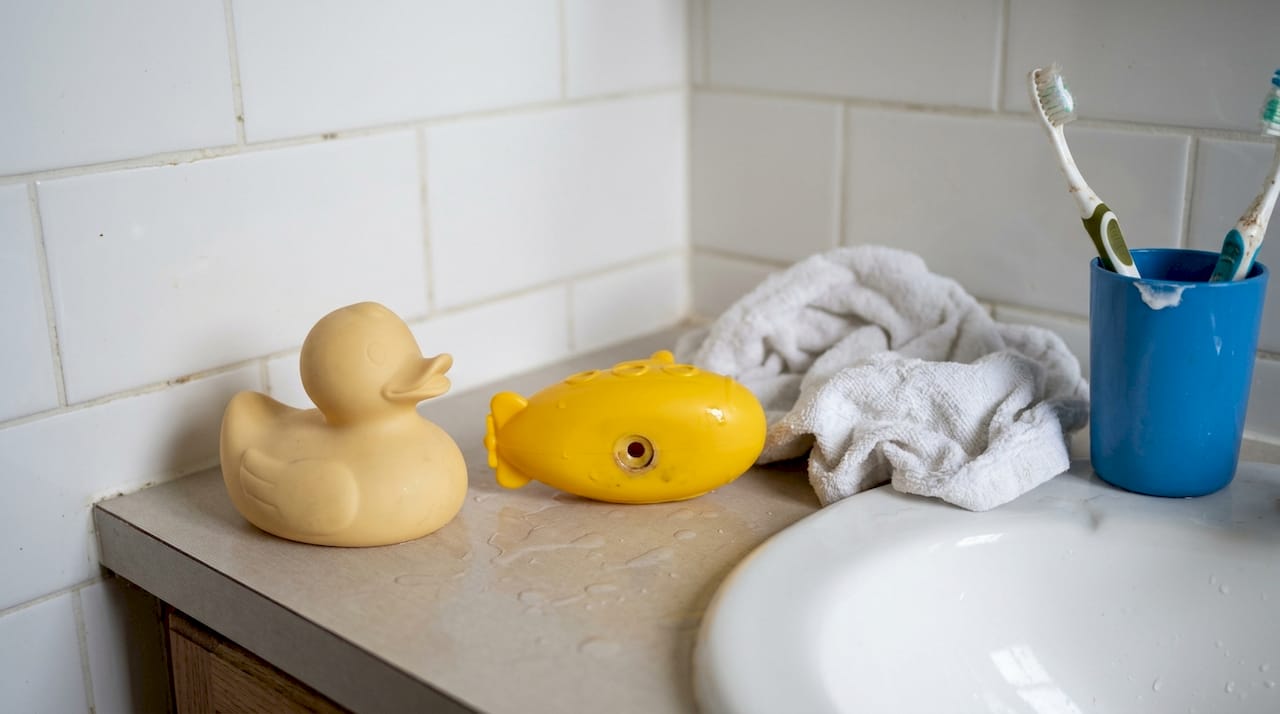
Natural rubber toys are hygienic with no holes for mould, which is a significant practical advantage. Many conventional bath toys have small openings that trap water inside, creating conditions for mould and bacterial growth. Natural rubber bath toys are typically constructed without these holes, making them far easier to keep clean and safe.
| Material | Biodegradable | Microplastic risk | Mould risk | Recyclable |
|---|---|---|---|---|
| Natural rubber | Yes | None | Low (no holes) | Limited |
| PVC plastic | No | High | High | Rarely |
| Synthetic rubber | No | Moderate | Moderate | No |
| Silicone | No | Low | Low | Rarely |
Top hygiene benefits in everyday use:
- No internal cavities where water and bacteria accumulate
- Easy to wipe clean or rinse without risk of trapped moisture
- Does not absorb chemical residues from cleaning products
- Naturally resistant to bacterial growth on the surface
- Free from the mould-prone construction common in hollow plastic toys
For families committed to sustainable baby products, choosing natural rubber is one of the most direct ways to reduce your household’s plastic footprint while keeping your baby safer at the same time. Every choice we make ripples into the future, and the materials in your baby’s toy basket are no exception.
Allergy risk, edge cases, and choosing alternatives
We want to be honest with you: natural rubber is not the right choice for every family. A small number of children have a sensitivity or allergy to the latex proteins naturally present in Hevea brasiliensis rubber. Understanding this risk helps you make a genuinely safe decision rather than a reflexively “natural” one.
Latex allergy is rare in the general infant population, but certain groups carry a higher risk. Children with spina bifida, those who have had multiple surgical procedures, or children from families with a strong history of latex sensitivity are more vulnerable. For these families, silicone is the recommended alternative.
“The primary risk of natural rubber is a rare latex protein allergy, which is more common in children with spina bifida or frequent healthcare exposure. Processed natural rubber dummies reduce this risk, but silicone is recommended when allergy is confirmed.”
Processing methods do reduce the concentration of latex proteins in finished products, which is why many babies with mild sensitivities tolerate processed natural rubber dummies without issue. Still, if you have any concern, it is always worth consulting your GP or paediatric allergist before introducing new materials.
Steps to take before choosing rubber products for your baby:
- Review your family’s allergy history, particularly any latex or rubber sensitivities
- Check whether your child has had multiple medical procedures involving latex equipment
- Consult your GP if your child has spina bifida or a complex medical history
- Introduce new materials gradually and observe for any skin, respiratory, or digestive reactions
- Choose certified products where latex protein levels are controlled in processing
For families at higher risk, choosing silicone alternatives is a sensible and well-supported decision. The spina bifida latex risk is well-documented and should be taken seriously.
Pro Tip: When introducing any new teether or dummy, let your baby use it for a short period while you observe closely. Redness around the mouth, hives, or unusual fussiness can be early signs of sensitivity worth discussing with your doctor.
Our take: how to weigh safety, sustainability, and practicality for your family
We’ve shared the facts. Here’s our honest perspective, shaped by years of working with parents, sustainability researchers, and child health advocates.
For the vast majority of families, natural rubber is the best available choice. It delivers genuine safety credentials, a lower environmental footprint, and a sensory experience that babies genuinely respond well to. The absence of BPA, phthalates, and synthetic additives is not a minor detail; it is a meaningful reduction in your child’s cumulative chemical exposure during a critical developmental window.
That said, we’d caution against treating “natural” as a universal guarantee. Latex allergy, while rare, is real. If your family has any relevant history, silicone is a responsible and equally safe alternative. The goal is not to be ideologically committed to one material; it is to make the most informed, evidence-based choice for your specific child.
What we encourage most is proactive evaluation. Read the certifications, check the construction, and trust your instincts as a parent. You can explore more on natural rubber benefits to build your confidence before making a purchase.
Natural rubber, chosen thoughtfully, is one of the most responsible decisions you can make for your baby’s health and for the planet they’ll grow up on.
Explore safe and sustainable natural rubber options for your family
If this article has helped clarify your thinking, the next step is finding products that actually live up to these standards. Not all natural rubber products are created equal, and knowing what to look for makes all the difference.
At Hevea Planet, every product is made from 100% natural rubber, certified to CE, UKCA, and GOLS standards, and designed with hygiene and sustainability at the forefront. Whether you’re starting with a dummy guide to find the right fit, exploring the Hevea Panda Teether for a teething baby, or simply wanting to learn why natural rubber is our material of choice, you’ll find everything you need to make a confident, conscious decision for your family.
Frequently asked questions
Is natural rubber really safer than silicone for babies?
Both natural rubber and silicone are considered safe choices for babies. Natural rubber offers greater eco-sustainability and a softer, more nipple-like feel, but silicone is the better option when latex allergy is a concern.
Can natural rubber baby products trigger allergies?
Latex allergy is rare in infants, but if your child has a history of severe allergies, spina bifida, or multiple medical procedures, choose silicone or introduce natural rubber slowly under medical guidance.
Why does the absence of holes matter in natural rubber toys?
Toys without holes cannot trap moisture internally, which means they are far more resistant to mould growth and bacterial build-up, making them more hygienic for babies during bath time and everyday play.
What certifications should I look for when buying natural rubber baby products?
Look for CE, UKCA, and GOLS certifications on any natural rubber baby product. These marks confirm the product has been tested to strict safety standards covering chemical composition and age-appropriateness.
